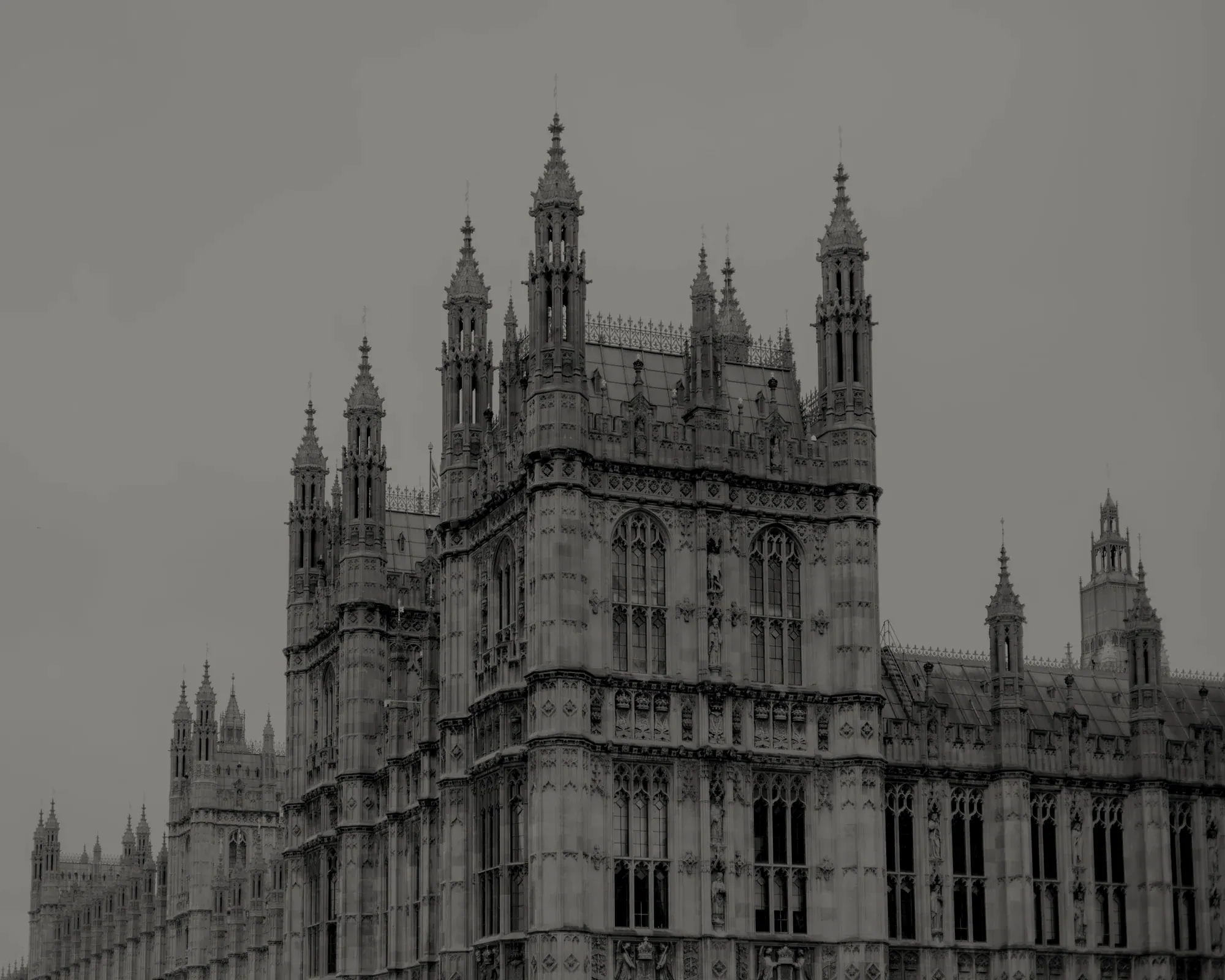
The West End, Paddington, Victoria and Marylebone
Westminster has 56 conservation areas, a City Plan whose current version was adopted on 21st January 2026 and, since 10th August 2026, a new development corporation handling planning around Oxford Street. We write fire strategies for theatres, hotels, basements, estate renewal blocks and listed buildings across the West End and beyond.
- Reply
- Same-day reply
- Fee
- Fixed, agreed before we start
- Signed off by
- A Chartered Engineer (CEng)
- Coverage
- In-house engineering, UK wide
- Scroll
Overview
Fire strategy for Westminster buildings
Westminster's City Plan 2019 to 2040 was first adopted on 21st April 2021. After a partial review, the current version was adopted by full council on 21st January 2026. Work has already started on a new City Plan, with consultation open until 11th December 2026.
The plan aims for at least 20,685 homes, of which at least 35 percent should be affordable. Two Housing Renewal Areas, Church Street and Edgware Road and the Ebury Bridge Estate, are to provide 2,750 new homes between them. Church Street alone is planned for at least 2,000 homes under its masterplan, along with at least 350 jobs and a health and well-being hub.
The Paddington Opportunity Area, designated in 2004, has capacity for 1,000 new homes and 13,000 new jobs by 2041. Victoria, designated in 2008, has capacity for 1,000 homes and 4,000 jobs. Nine neighbourhood plans have been made in the city, including Soho on 8th October 2021 and Victoria on 7th January 2026.
Who decides
Who approves a fire strategy in Westminster
- Planning
- Westminster City Council (official source, opens in a new tab)
- Decides applications across most of the city. Inside the Oxford Street Mayoral Development Area, the OSDC has been responsible for all planning matters since 10th August 2026.
- Building control
- Westminster building control (official source, opens in a new tab)
- The council's own surveyors, aiming for a decision within five weeks. Plans for a higher-risk building are sent to the Building Safety Regulator rather than the council.
- Fire station
- Paddington Fire Station (official source, opens in a new tab)
- Paddington stands on Harrow Road and keeps the turntable ladder named in LFB's Westminster risk plan. The city's other station is Soho, on Shaftesbury Avenue.
- City Plan
- Westminster's planning policies (official source, opens in a new tab)
- The council's page for the City Plan adopted in January 2026 and the neighbourhood plans.
Local issues
What a Westminster fire strategy has to deal with.
Theatres and hotels in old fabric
LFB counts nearly 500 hotels and 56 theatres in Westminster. Theatre Royal Drury Lane and the Royal Opera House are listed Grade I and the London Palladium Grade II*. Large audiences in historic auditoria need stage separation, exit routes and staff procedures designed around fabric that cannot easily be changed.
Basements and underground space
The brigade's risk plan lists complex underground structures such as tube lines, stations and vaults, along with crew training for fires in basements. Deep basements below shops and flats need their own smoke clearance and a protected route for firefighters. Stairs from a basement usually have to be separated from those serving the upper floors.
Height measured against context
Policy 46 defines a tall building as twice the prevailing context height or one that significantly changes the skyline. The plan says Westminster is not generally suitable for tall buildings, although buildings two to three times a 20m context height may be appropriate in the Paddington and Victoria Opportunity Areas. Towers in Victoria must also avoid breaching the protected silhouette of the World Heritage Site.
Estate renewal with Policy 47 heights
Ebury Bridge is planned for about 750 homes and Church Street for at least 2,000, with Policy 47 setting heights for both renewal areas. Where renewal is built in phases, each completed block has to remain safe to occupy beside active construction. Any block of 18 metres or seven storeys with at least two homes falls under the higher-risk building regime.
Building types
The building types we see in Westminster
- Fire Strategy for Retail and Leisure Buildings
West End theatres including the London Palladium and Theatre Royal Drury Lane
- Fire Strategy for Transport and Infrastructure
Paddington Station, listed Grade I with the Lawn and its office blocks
- Fire Strategy for Blocks of Flats and Apartments
Church Street and Ebury Bridge estate renewal
- Fire Strategy for Hospitals and Healthcare Buildings
St Mary's Hospital on Praed Street, which runs one of London's four major trauma centres
What we deliver
Fire strategy services in Westminster.
Retrospective Fire Strategy
Existing buildings, Building Safety Act 2022, UK wide
Read more
Fire Strategy Reports
New build, refurbishment and change of use, UK wide
Read more
Planning Fire Statements and Gateway 1
Gateway 1 and London Plan D12, UK wide
Read more
Fire Engineering
Performance based design, in-house, UK wide
Read moreCommon questions
Fire strategy questions in Westminster, answered.
Cannot see your question? Get in touch and we will answer it directly.
All fire strategy questionsInside the Mayoral Development Area the Oxford Street Development Corporation has been the local planning authority since 10th August 2026. Westminster City Council still decides applications in the rest of the city.
Guides
Guides worth reading first.
More in London
All locationsFire strategy in Westminster
Tell us about the building
Send us the drawings, the building type and the stage you are at. We reply the same day with a clear scope, programme and fixed fee.
- 01Written in-house by the engineer who will defend it to the approver
- 02Approved Document B, BS 9999, BS 9991 and BS 7974
- 03Building Control and fire authority engagement handled for you
- 04Projects of every size, across the UK
Request a quote
Same-day reply