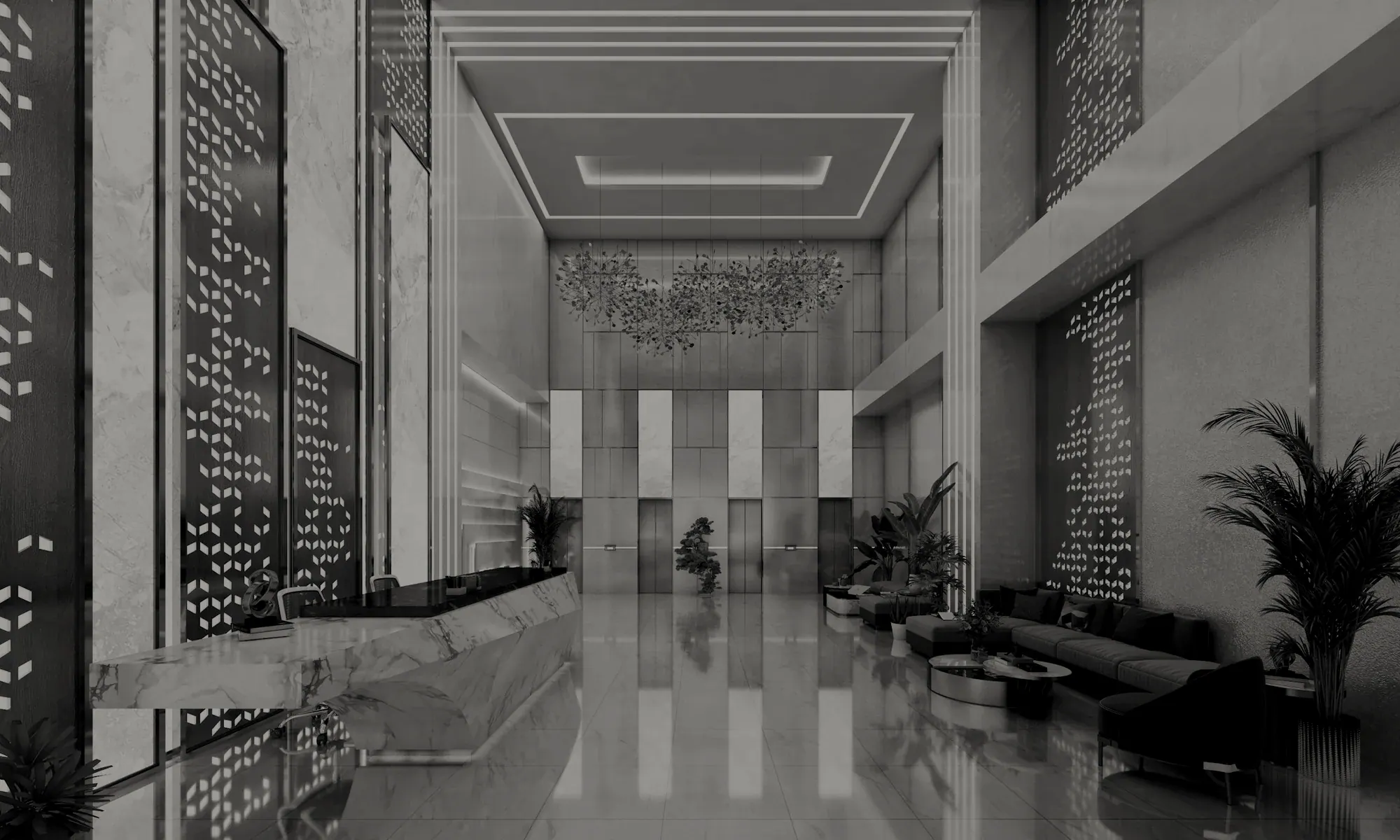
Hotels, serviced apartments and hostels
Hotels mix sleeping guests who do not know the building with kitchens, bars and function rooms. The strategy has to protect bedrooms as compartments, deliver simultaneous evacuation and keep the public areas workable.
- Reply
- Same-day reply
- Fee
- Fixed, agreed before we start
- Written to
- BS 9999:2017, Approved Document B Volume 2, BS 5839-1 Category L1 or L2
- Signed off by
- A Chartered Engineer (CEng)
- Scroll
What makes this sector different
What a fire strategy for hotels has to answer.
Sleeping risk
Bedroom corridors, protected routes and the detection that wakes guests in time.
Conversions
Office to hotel and heritage conversions where the existing structure constrains the escape routes.
Serviced apartments
Buildings that sit between hotels and flats and need a strategy that reflects how they are actually operated.
Function spaces
Assembly occupancies alongside sleeping risk, with their own exit capacity.
Evacuation strategy
How evacuation works in a hotel
Hotels evacuate simultaneously. Guests are asleep, unfamiliar with the building and may have arrived that evening. Everything depends on waking them early and giving them a protected route. Detection in every bedroom, sounders loud enough to rouse a sleeper and bedroom doors that close behind them are the core of the strategy.
Each bedroom is enclosed in fire resisting construction and opens onto a protected corridor. Corridors are subdivided by fire doors to limit how far smoke can travel and dead ends are kept short. Larger hotels sometimes use a staged alarm that alerts staff first. That only works with trained staff on duty all night and a short, fixed investigation time.
Our approach
How we write a fire strategy for hotels.
We produce hotel strategies that make the sleeping risk safe without compromising the public areas, using BS 9999 or Approved Document B as the building suits. For conversions we engineer the justification where the existing structure defeats the guidance.
Typical deliverables
- Fire strategy report and plans
- Evacuation strategy for guests and staff
- Conversion feasibility advice
- Retrospective strategies for existing hotels
Standards and guidance
Fire safety guidance for hotels
- BS 9999:2017
- Treats hotels as a sleeping risk where occupants are unfamiliar with the building, which is among the most onerous risk profiles.
- Approved Document B Volume 2 (official source, opens in a new tab)
- Places hotels in the other residential purpose group, with limits on travel distance from bedrooms and along corridors.
- BS 5839-1 Category L1 or L2
- The standard for the fire alarm system. L1 provides detection throughout. L2 covers escape routes, the rooms opening onto them and defined high risk rooms.
- Fire Safety Order 2005 (official source, opens in a new tab)
- Applies to every hotel. Government guidance for sleeping accommodation sets out what the fire risk assessment should cover.
Common questions
Fire strategy questions on hotels, answered.
Cannot see your question? Get in touch and we will answer it directly.
All fire strategy questionsNo. Hotels are not dwellings for the Building Safety Act definition so they are outside both the gateway and in-occupation higher-risk regimes. They remain fully within the Building Regulations and the Fire Safety Order.
What we deliver
Services for hotels.
Fire Strategy Reports
New build, refurbishment and change of use, UK wide
Read more
Retrospective Fire Strategy
Existing buildings, Building Safety Act 2022, UK wide
Read more
Fire Engineering
Performance based design, in-house, UK wide
Read more
Fire Strategy Plans and Drawings
Annotated plans for every storey, UK wide
Read moreOther sectors
All sectorsFire strategy for hotels
Tell us about the building
Send us the drawings, the building type and the stage you are at. We reply the same day with a clear scope, programme and fixed fee.
- 01Written in-house by the engineer who will defend it to the approver
- 02Approved Document B, BS 9999, BS 9991 and BS 7974
- 03Building Control and fire authority engagement handled for you
- 04Projects of every size, across the UK
Request a quote
Same-day reply