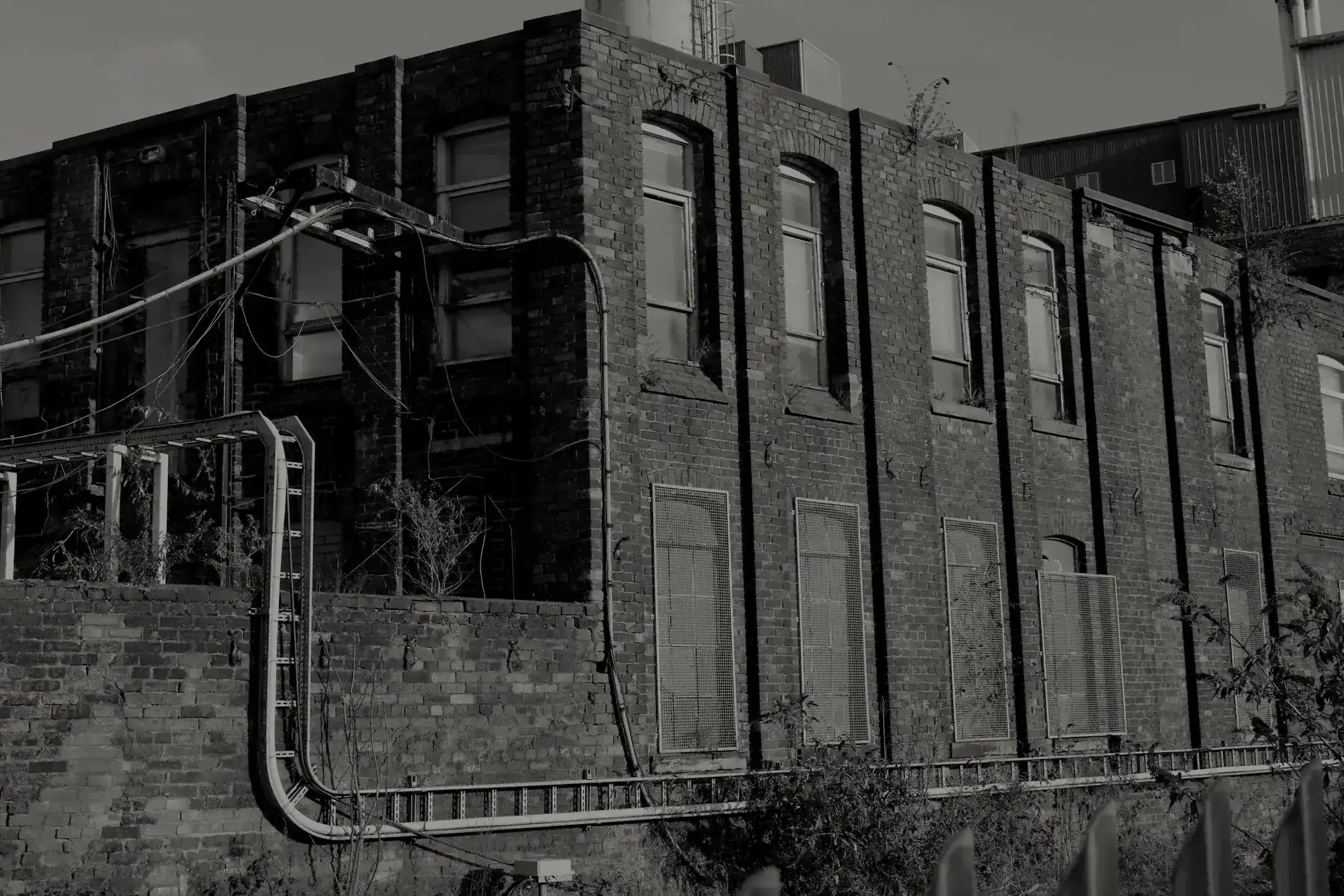
Existing buildings, Building Safety Act 2022, UK wide
Many existing buildings have no usable fire strategy. They pre date modern regulations, were altered without one or simply lost the paperwork. A retrospective fire strategy reviews the building as it stands, documents how it manages fire risk and sets out where it falls short of current expectations.
- Reply
- Same-day reply
- Fee
- Fixed, agreed before we start
- Written to
- Building Safety Act 2022, Approved Document B and BS 5588, BS 9991 and BS 9999
- Signed off by
- A Chartered Engineer (CEng)
- Scroll
Overview
What is a retrospective fire strategy?
A fire strategy for a building that never had one
A retrospective fire strategy documents the as-built fire safety provisions of an existing building: the means of escape, the compartmentation, the structural fire protection, the detection and warning systems and the firefighting access. It is produced where no fire strategy was created at the time of construction or where the existing document is incomplete, superseded or no longer reflects the building as it stands today.
It gives owners and duty holders a clear, defensible position, which matters more than ever for older and higher-risk residential buildings under the Building Safety Act 2022. For a higher-risk building it is frequently the foundation of the building safety case.
The building is assessed primarily against the standards that applied when it was constructed, which may include earlier editions of Approved Document B, BS 5588 or other codes of the period, with current guidance such as BS 9991 and BS 9999 referenced where relevant.
Standards and legislation
- Building Safety Act 2022
- Requires higher-risk buildings to be registered with the Building Safety Regulator and supported by a safety case.
- Approved Document B and BS 5588
- Retrospective strategies are benchmarked against the guidance in force at the time of construction.
- BS 9991 and BS 9999
- Current codes referenced where the building is being upgraded or where the original standard is silent.
- Fire Safety Order 2005
- The Responsible Person must have fire safety information to manage the building. The retrospective strategy supplies it.
When
When a retrospective fire strategy is required
Five situations that require a retrospective fire strategy
BSR registration
Buildings of at least 18 metres or seven storeys with two or more residential units must be registered with the Building Safety Regulator. A current fire strategy underpins the submission.
Building safety case
The safety case report must demonstrate the building is safe to occupy. Where no strategy exists, the retrospective strategy is the core document the case rests on.
Fire safety review or audit
Where a review or a fire risk assessment finds that no strategy exists or that the existing one is materially incomplete or out of date.
Refurbishment or change of use
Any significant change needs an updated strategy. If there is no baseline, a retrospective document has to be produced first.
Transaction or dispute
Purchasers, lenders, insurers and leaseholders increasingly need evidence of the fire safety rationale as part of due diligence on existing buildings.
Regulation 38 should have delivered this information at handover. Where it never happened, the retrospective strategy reconstructs it from survey, drawings and records.
Contents
What a retrospective fire strategy covers
The building as it stands, not as it was drawn
The output is a document a regulator, insurer or purchaser can read and a building manager can use.
- 01A survey of the as-built condition, including compartment lines, fire doors and protected routes
- 02The original design standard and the guidance in force at the time of construction
- 03The means of escape and evacuation strategy actually in place
- 04Detection, alarm, emergency lighting and any suppression or smoke control
- 05Firefighting access and facilities
- 06A gap analysis against current expectations, prioritised
- 07The management arrangements the building depends on
- 08A clear statement of the residual risks and what should happen next
Our process
How the work runs.
- 01
Records review
We gather whatever exists: drawings, building control records, previous assessments and remedial work history.
- 02
Site survey
We survey the building as it stands. We do not write retrospective strategies from drawings alone.
- 03
Benchmarking
We establish the standard the building was built to and the current guidance it would now be measured against.
- 04
Strategy and gap analysis
We document how the building manages fire risk today and set out, in priority order, where it falls short.
- 05
Support
We help you act on the findings, whether that is a safety case, an upgrade programme or a conversation with the regulator.
What you get
- A retrospective fire strategy report with annotated as-existing fire strategy plans
- A prioritised gap analysis against current guidance
- A schedule of management assumptions for the Responsible Person
- A document structured to feed directly into a building safety case report
- Sheet
- FS-02
- Fee
- Fixed, agreed first
Why us
Engineered in-house, not subcontracted.
Surveyed, not assumed
The strategy is built from the building as it is, by the people who surveyed it.
In-house fire engineering
Where an older building cannot meet current guidance literally, we can engineer and justify an alternative rather than leave a gap.
Written for use
A clear account that a regulator can test and a building manager can act on.
UK wide
Single blocks or whole portfolios, anywhere in the UK.
Need retrospective fire strategy for a project?
Send us the drawings and we will tell you what the project needs the same day.
Common questions
Retrospective fire strategy: your questions, answered.
Cannot see your question? Get in touch and we will answer it directly.
All fire strategy questionsFor an occupied higher-risk building in England the Accountable Person needs a safety case and the fire strategy is normally its foundation. For other buildings there is no explicit duty to produce one but the Responsible Person must have the information to manage fire safety and a fire risk assessor will expect to see the design intent. In practice many existing buildings need one.
Retrospective fire strategy by sector
All sectorsGuides
Guides on this topic.
Keep reading
Related services

Building Safety Case Reports
Building Safety Act 2022, England
Read more
Regulation 38 Fire Safety Information
Building Regulations 2010 regulation 38, England and Wales
Read more
Fire Strategy Review and Peer Review
Independent second opinion, UK wide
Read more
Fire Strategy Reports
New build, refurbishment and change of use, UK wide
Read moreStart your retrospective fire strategy
Tell us about the building
Send us the drawings, the building type and the stage you are at. We reply the same day with a clear scope, programme and fixed fee.
- 01Written in-house by the engineer who will defend it to the approver
- 02Approved Document B, BS 9999, BS 9991 and BS 7974
- 03Building Control and fire authority engagement handled for you
- 04Projects of every size, across the UK
Request a quote
Same-day reply